
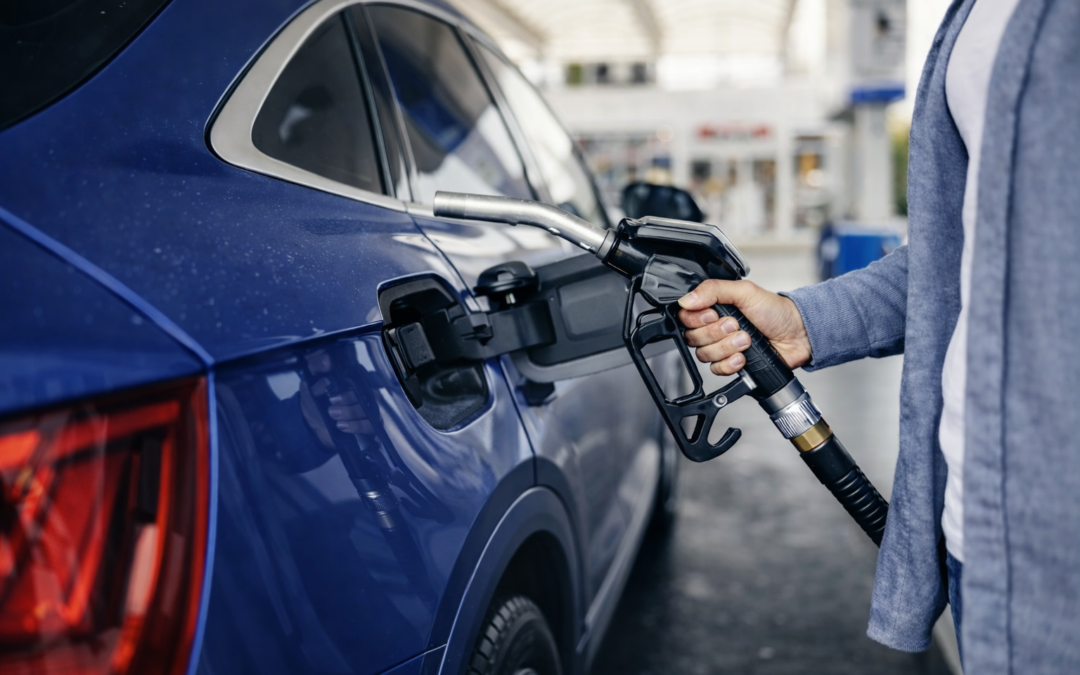
If your business runs on fuel – or relies on anything that does – the last few weeks have changed your cost base in ways that are hard to absorb quietly. Diesel above $2.40 a litre, supply chain surcharges landing without warning, and margins that were already tight getting tighter. The government’s response, announced on 30 March 2026 as part of the National Fuel Security Plan, includes a temporary fuel excise reduction and a dedicated ATO support package for businesses struggling to meet their tax obligations as a result.
This is not a subsidy. It is a set of practical measures designed to give affected businesses breathing room while fuel prices remain elevated. Some of it is automatic. Some of it requires action before 30 June. If your business is feeling the impact, this guide covers what is available, who qualifies, and what you need to do.
The Fuel Excise Reduction – What Actually Changed
From 1 April 2026, the federal government reduced the excise on petrol and diesel from 52.6 cents per litre to 20.6 cents per litre – a reduction of 32 cents per litre. That reduction includes an additional 5.7 cents per litre agreed with the states on 2 April, on top of the initial 26.3 cent cut announced at the National Cabinet meeting. The ATO’s excise duty rates page has the current figures.
LPG dropped from 17.2 to 6.7 cents per litre. LNG and CNG fell from 36.0 to 14.1 cents per kilogram. Aviation fuels are unchanged. The Heavy Vehicle Road User Charge has been reduced to zero for the same period, and the next scheduled increase has been deferred by six months.
The reduction is scheduled to run from 1 April to 30 June 2026. Whether it is extended will depend on global conditions, but there is no commitment beyond that date. For businesses filling fleet vehicles, running equipment, or absorbing fuel-driven freight costs, the saving is material but temporary, and planning should reflect that.
The ATO Fuel Response Payment Plan
The more significant measure for businesses under pressure is the ATO Fuel Response Payment Plan, available from 1 April 2026 with applications closing on 30 June 2026.
The plan allows eligible businesses to restructure existing or new tax debts into 36 equal monthly instalments with no upfront payment required. The ATO will also remit the General Interest Charge that accrues from the time of application through to the third monthly instalment, provided two conditions are met: all instalments are paid for the first three months, and all outstanding lodgements are brought up to date within three months of the plan being established.
That GIC remission is worth understanding clearly. Interest on tax debt accumulates quickly, and having it waived for the first three months is a genuine concession that the ATO does not ordinarily offer. It is automatic if you meet the conditions – no separate application is needed.
Who Is Eligible
The ATO’s fuel response guidance sets out four eligibility requirements, all of which must be met:
First, you must hold an ABN. Second, your operating costs must have increased either directly through higher fuel costs or indirectly through increased transport, logistics, or supply chain costs. Third, you must have a new tax debt or be unable to service an existing one. Fourth, and this is where the test has some nuance, you need to demonstrate that the reduced capacity to pay is specifically attributable to fuel prices – not a general business downturn or ordinary cashflow difficulty. The ATO frames the test as: if fuel prices had not been this high, you anticipate you would have been able to meet your payment obligations.
That fourth condition matters. This is not a catch-all for any business with a tax debt. It is targeted at businesses where fuel costs are the demonstrable driver of the payment difficulty. For transport operators, logistics businesses, agricultural operations, construction companies running heavy equipment, and any business with a meaningful fuel component in its cost structure, the connection is usually straightforward to establish. For businesses where the link is more indirect – higher supplier costs flowing through to margin pressure – documenting the connection clearly at the time of application is important.
How to Apply
Applications are submitted through ATO Online Services. For businesses, log into ATO Online Services for Business. For sole traders, use Online Services for Individuals. Your tax agent can also apply on your behalf through Online Services for Agents, provided they have written authority from you.
Once logged in, you should see a “Fuel response” alert on the home page. Follow the prompts, complete the form, and sign the declaration. Payment is via direct debit from a bank account or credit card, noting that credit card surcharges may apply.
One important detail: submitting the form does not automatically confirm a payment plan. The ATO will follow up with next steps. Do not assume the plan is in place until you receive confirmation.
What This Means for Your BAS
If your business claims fuel tax credits, the rates have changed for the April to June 2026 quarter and you need to use the correct figures when preparing your BAS. The ATO’s fuel tax credit rates page has been updated.
The practical effect is that fuel tax credits for all business uses – both heavy vehicle on-road and all other eligible uses – are now 20.6 cents per litre for the duration of the excise reduction. Previously, there was a meaningful differential between on-road heavy vehicle use (excise minus the road user charge) and off-road or non-road use (full excise rate). With the road user charge at zero, both rates are now the same.
If you prepare your own BAS, check the rates carefully before lodging. If your accountant or bookkeeper handles it, make sure they are aware of the change. Using the old rates will either understate your claim or, if the rates are applied incorrectly in the other direction, create a compliance issue you do not need.
Other ATO Support Available
Beyond the dedicated Fuel Response Payment Plan, the ATO has indicated it will exercise broader discretion for businesses affected by fuel costs. That includes varying PAYG instalments where fuel costs have reduced profitability, priority processing of tax returns for impacted businesses expecting refunds, remitting penalties and interest where businesses engage proactively, and standard payment plan arrangements for those who may not qualify for the fuel-specific plan but still need flexibility.
The consistent message from the ATO is that early engagement matters. ATO Commissioner Rob Heferen has said publicly that businesses should contact the ATO before they miss a payment, not after. Lodging on time even when you cannot pay in full is significantly better than doing neither, because it demonstrates good faith and avoids late-lodgement penalties on top of the underlying debt.
Director Liability – Why This Cannot Be Ignored
For company directors, there is an additional dimension that makes early action essential. Where a company fails to pay PAYG withholding or superannuation guarantee on time and does not enter into a payment arrangement, the ATO can issue Director Penalty Notices that make directors personally liable for the unpaid amounts. That personal liability cannot be discharged through the company and, in some circumstances, cannot be resolved even by placing the company into liquidation.
If fuel costs are pushing your company toward a position where PAYG or super payments may be late, establishing a payment plan before the due date is the single most important step you can take to protect yourself personally. The Fuel Response Payment Plan, or a standard ATO payment arrangement, provides that protection.
What Businesses Should Do Now
If your business has been materially affected by fuel costs, the steps worth taking before 30 June are straightforward.
Review your current tax position. If you have an existing debt or expect to have one, assess whether the Fuel Response Payment Plan criteria apply to your situation. If they do, apply sooner rather than later – there is no advantage to waiting and the 30 June deadline is firm.
Check your PAYG instalments. If your profitability has dropped because of fuel costs, varying your instalments now improves your cash position immediately rather than waiting for a refund when you lodge your return.
Get your BAS right. Use the updated fuel tax credit rates for the April to June quarter. If your business claims fuel tax credits on any meaningful volume, the rate change affects the numbers and getting it wrong in either direction creates problems.
Talk to your adviser. The eligibility criteria have some judgement involved, particularly around demonstrating the fuel cost connection. Your accountant can help frame the application properly and identify any other ATO concessions that may apply to your specific circumstances.
Speak with a Prime Partners adviser about ATO fuel crisis support.
Frequently Asked Questions
This article is general in nature and does not constitute financial, tax, or legal advice. Business circumstances vary and you should speak with a qualified adviser before making decisions based on your specific position.